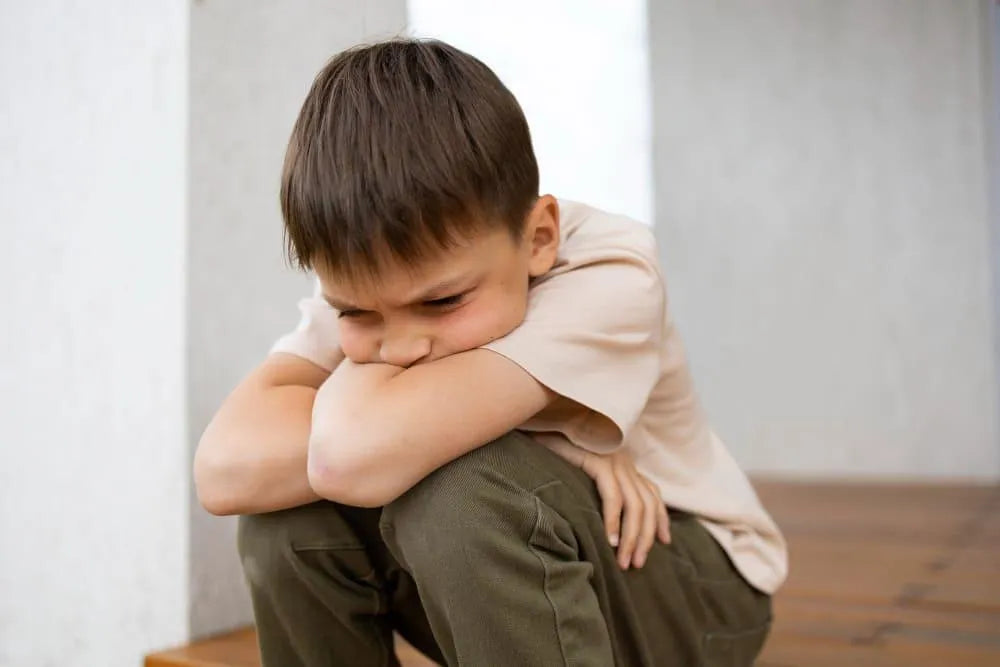
My son bites his nails: how to help him overcome this habit
The habit of nail-biting, technically known as onychophagia, is more common in children but can also persist into adulthood.
Although many parents worry about the aesthetic implications of this habit, it is important to understand that it is generally related to emotional issues. This is because nail-biting is commonly associated with stress, anxiety, or boredom.
Thus, children may bite their nails as a form of distraction in uncomfortable or emotionally challenging situations for them.
Therefore, before addressing strategies to deal with your nail-biting child, we will provide valuable tips for you to first investigate the cause of this behavior and tackle the problem at its root.
7 causes of nail-biting and how to combat them
The habit of nail-biting can have several reasons, and understanding them is fundamental to effectively addressing the problem. The most common causes are:
1. Stress and anxiety
One of the most common reasons for your child to bite their nails is stressful situations, at school, at home, or in other areas of their life. The behavior usually arises as a way to relieve emotional tension.
If this is the case, helping your child develop coping skills and reduce stress will be crucial to overcoming the problem. It is likely that the help of a child psychologist will be necessary.
If the child enjoys it, you can try practicing meditation or yoga, which are interesting options for relieving anxiety and tension.
2. Imitation of behavior
Children often imitate the behavior of adults around them, and if they observe their parents or other family members biting their nails, it is possible that they will do so too.
It is a habit that, like any other, can be learned through observation and imitation.
Thus, it is of utmost importance that adults are aware that their actions serve as a reference for the minors they live with and, therefore, should be attentive to habits and behaviors that negatively influence these children.
3. Boredom and inactivity
Boredom and lack of stimulating activities can also lead children to bite their nails as a way to pass the time.
When they have nothing interesting to do or are bored, they may resort to this behavior as an automatic activity.
In this case, a good alternative is to teach your child to recognize when they are feeling bored and suggest that they seek healthy distractions, such as drawing, reading, playing with a puzzle, manipulating playdough, or practicing a hobby.
4. Perfectionism and nervousness
Children who are perfectionists or have anxious tendencies may be more prone to developing the habit of nail-biting.
They often feel pressured to achieve high standards of performance in different areas and bite their nails in an attempt to minimize pressure and nervousness.
If this is the situation, it is essential to seek the support of a child therapist who can help identify the "why" behind the child feeling this way, and only then adopt an assertive approach.
5. Sensory habits
Some children may bite their nails as part of sensory behavior. This is because they are more sensitive to certain textures or sensations and may seek the desired stimulation by biting their nails, mainly intending self-regulation.
Thus, the ideal is to provide more suitable sensory alternatives for the child to handle. For example, toys, objects, or fabrics of various textures, or even a rubber mat to step on.
It is also effective to seek activities that explore touch, such as finger painting, foot and hand massages, and depending on the child's age, gardening can be interesting.
6. OCD or GAD
In some cases, the habit of nail-biting may be associated with psychological disorders, such as obsessive-compulsive disorder (OCD) or generalized anxiety disorder (GAD).
In these situations, the behavior may be just a symptom of a broader condition that requires more specific medical attention. Seek specialized medical help.
7. Sucking habits
Children who had the habit of thumb-sucking in early childhood may continue to seek the associated oral sensation by biting their nails as they grow older.
Thus, an effective approach is to provide healthy alternatives to satisfy this need.
Palliatively, you can offer sensory objects as substitutes, such as teethers or silicone straws, which allow the child to seek the desired oral sensation without damaging their nails.
But, in parallel, consult the pediatrician for precise guidance on how to definitively resolve the problem.
Is nail-biting serious?
Nail-biting can indeed have consequences for a child's health, including the risk of developing infections on and around the nails.
Additionally, this habit can also lead to dental problems, such as enamel wear and teeth misalignment.
Therefore, it is definitely important to intervene to help the child abandon this habit as soon as possible.